
Residential vs Commercial Property: Which Is Right for You?

Residential vs Commercial Property: Which Is Right for You?
Choosing between a residential and commercial property is an important decision for any buyer or investor. Both options can offer attractive opportunities, but they come with different benefits, risks, costs, and responsibilities.
Whether you are looking for a comfortable home for your family or an investment that can generate rental income and long-term value, understanding the difference between residential and commercial property can help you make a more informed decision.
🏠 Residential Property
Residential properties are designed primarily for living purposes. These include apartments, independent houses, villas, builder floors, and residential plots.
For many buyers, residential property is the first step toward building financial security while having a place to call home.
Benefits of Residential Property
- Suitable for personal use: You can purchase a home for yourself or your family.
- Consistent demand: Housing is an essential requirement, which can support long-term demand.
- Potential appreciation: Property values may increase over time depending on location and development.
- Rental income: Owners can rent out their property and generate regular income.
- Greater emotional value: Owning a home provides stability, comfort, and a sense of security.
Residential properties are particularly suitable for first-time buyers, families, and investors looking for a relatively straightforward entry into real estate.
🏢 Commercial Property
Commercial properties are primarily used for business and professional activities. Examples include shops, offices, showrooms, warehouses, commercial complexes, and other business spaces.
Commercial real estate can be attractive for investors who are looking for rental income and have a higher investment budget.
Benefits of Commercial Property
- Potential for higher rental income: Commercial spaces can sometimes generate higher rental yields than residential properties.
- Business opportunities: Owners can use the property for their own business or lease it to another business.
- Longer leases: Commercial tenants may sign longer-term agreements, depending on the property and market.
- Location-driven value: Properties in high-footfall areas, business districts, and developing commercial zones can have strong demand.
- Portfolio diversification: Commercial property can add another asset type to an investor's real-estate portfolio.
⚖️ Residential vs Commercial: What Should You Choose?
The right choice depends on your budget, purpose, risk tolerance, and long-term goals.
If your primary goal is to buy a home for your family, residential property is usually the natural choice. If your focus is rental income, business use, or investment diversification, commercial property may be worth considering.
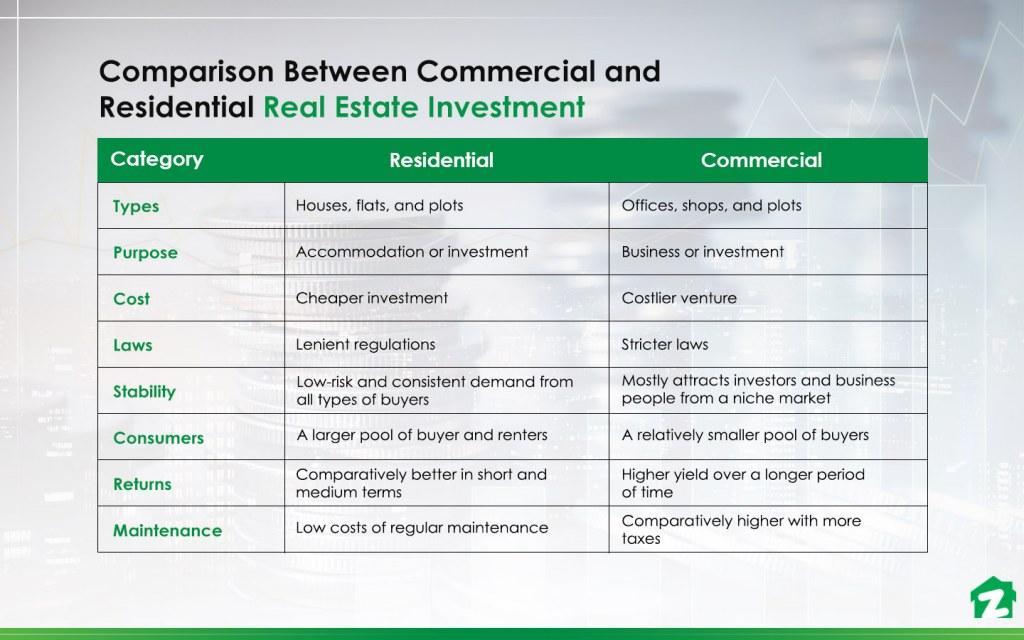
| Factor | Residential Property | Commercial Property |
|---|---|---|
| Primary Use | Living | Business |
| Initial Investment | Generally lower | Generally higher |
| Rental Potential | Moderate | Can be higher |
| Tenant Demand | Broad | Depends heavily on location and business activity |
| Management | Usually simpler | Can require more active management |
| Suitable For | Families & first-time buyers | Businesses & experienced investors |
📍 Location Matters
Regardless of the type of property you choose, location remains one of the most important factors.
For residential properties, consider schools, hospitals, transportation, markets, safety, neighbourhood quality, and future infrastructure.
For commercial properties, factors such as visibility, accessibility, parking, footfall, nearby businesses, connectivity, and local commercial activity can have a major impact on demand.
💡 Think Beyond the Purchase Price
The cost of purchasing a property is only one part of the investment. Buyers should also consider registration expenses, taxes, maintenance, renovation, insurance, financing costs, and potential vacancy periods.
A property that appears inexpensive may not necessarily be the most profitable choice. Looking at the complete financial picture can help you make a better decision.

Every buyer has different goals. There is no single property type that is perfect for everyone.
At GO Properties, our aim is to help buyers and investors understand their options and find properties that match their requirements, budget, and long-term objectives.
Whether you're searching for a family home, a residential investment, a commercial space, or your next real-estate opportunity, taking the time to evaluate the property carefully can make a significant difference.
Choose wisely. Invest confidently. Choose GO Properties.